

Strengthening Indonesia’s Circular Economy Transition: Stakeholders Convene to Refine Policy Recommendations for the Electronics and Construction Sectors
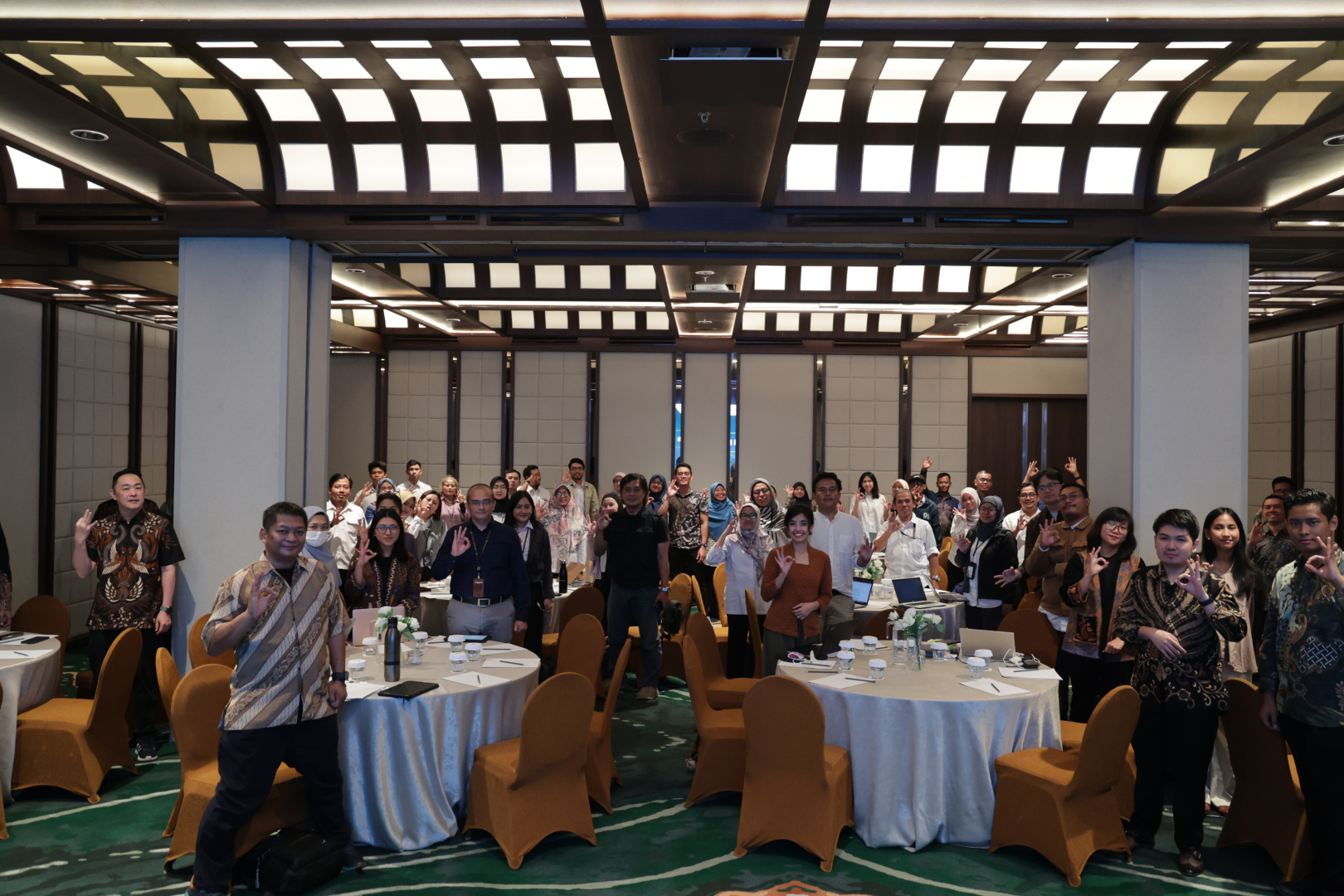
Jakarta, 15 June 2026 — More than 50 representatives from government institutions, academia, industry associations, businesses, and development partners gathered in Jakarta for the Public Consultation on the Circular Economy Policy Review and Recommendations for the Electronics and Construction Sectors, jointly organized by the Ministry of National Development Planning (Bappenas) and PAGE Indonesia.
The consultation served as a critical step in validating and refining policy recommendations aimed at accelerating Indonesia’s transition toward a more resource-efficient, low-carbon, and circular economy. Building on the validation workshop conducted earlier this year, the event provided a platform for stakeholders to review findings, exchange perspectives, and identify practical pathways for implementation.
As Indonesia advances its circular economy agenda under the National Long-Term Development Plan (RPJPN), the electronics and construction sectors have emerged as strategic priorities due to their significant consumption of materials and generation of waste. Globally, these sectors account for nearly half of all material extraction and contribute substantially to lifecycle emissions, underscoring the urgency of systemic transformation.
Turning Circular Economy Ambitions into Action
Opening the consultation, Made Rani, National Project Coordinator of PAGE Indonesia, underscored the importance of ensuring that circular economy policies are grounded in practical realities and informed by diverse stakeholder perspectives. She noted that the consultation represents an important milestone in translating circular economy ambitions into actionable and implementable policy recommendations.
“A successful transition to a circular economy requires strong collaboration across sectors. Through this consultation, we hope to ensure that the recommendations are not only technically sound but also relevant, realistic, and capable of delivering tangible benefits for both people and the planet,” said Made Rani.
Rani further highlighted that the study explores concrete opportunities to strengthen sustainable public procurement, Extended Producer Responsibility (EPR), eco-design, and resource efficiency measures in two sectors that play a critical role in Indonesia’s development pathway.
Furthermore, In his opening remarks, Nizhar Marizi, Director of Environment at Bappenas, emphasized the strategic importance of the consultation in strengthening Indonesia’s circular economy agenda.
“This consultation is an important follow-up to the validation workshop held earlier this year. It provides an opportunity to ensure that the recommendations are relevant, contextual, and practical for implementation while reflecting the perspectives of a broad range of stakeholders,” he noted.
Nizhar further highlighted that the electronics and construction sectors place considerable pressure on natural resources and generate significant environmental impacts throughout their lifecycle. He stressed that transitioning to a circular economy requires a systemic shift across production, consumption, recovery, and reuse systems, supported by strong collaboration among government, industry, academia, and communities.
Advancing Circularity in the Construction Sector
The consultation explored policy recommendations aimed at embedding circular economy principles throughout the construction value chain, from design and procurement to maintenance and demolition. Key recommendations include integrating circularity requirements into public procurement systems, strengthening material traceability, improving data and monitoring systems, and promoting the use of sustainable and recycled construction materials.
Representatives from the Ministry of Public Works welcomed many of the findings, noting that they align with ongoing efforts to advance sustainable construction practices across Indonesia.
“Circular construction cannot be achieved through regulation alone. Industry readiness, technical standards, and collaboration across the value chain are equally important to ensure that circular materials can be adopted safely and at scale,” noted a representative from the Ministry of Public Works.
Participants also discussed opportunities to incorporate environmental performance indicators and circularity criteria into procurement processes, creating stronger incentives for contractors and suppliers to innovate and reduce environmental impacts throughout the lifecycle of construction projects.
Building a More Circular Electronics Sector
Discussions on the electronics sector focused on addressing the growing challenge of electronic waste (e-waste) while creating enabling conditions for circular business models. Participants reviewed recommendations related to the development of a dedicated Extended Producer Responsibility (EPR) framework, expansion of collection and recycling infrastructure, promotion of eco-design principles, and strengthening systems for material recovery.
Stakeholders acknowledged that while awareness of circular economy practices within the electronics industry is increasing, important challenges remain. These include limited infrastructure for e-waste collection and recycling, unclear responsibilities across the value chain, and the need for incentives that encourage producers to adopt take-back schemes and circular product design.
The discussion also highlighted the importance of increasing public awareness and consumer participation to ensure that electronic products are properly collected, repaired, refurbished, or recycled at the end of their useful life.
Governance, Incentives, and Multi-Stakeholder Collaboration
Across both sectors, participants emphasized that effective implementation will require stronger policy coherence, clearer institutional mandates, and improved coordination between national and subnational governments. Discussions also underscored the importance of fiscal and non-fiscal incentives to encourage investment in circular economy initiatives and strengthen the business case for circularity.
Providing reflections during the consultation, Prof. Chalid from the Centre for Sustainability and Waste Management (CSWM), Universitas Indonesia, highlighted that the transition to a circular economy extends beyond technical solutions and regulatory frameworks.
“The success of circular economy implementation ultimately depends on people. Education, behavioral change, strong institutions, and collaboration across stakeholders are just as important as policies and technologies,” he emphasized.
Participants further highlighted the importance of adopting a pentahelix approach, bringing together government, businesses, academia, communities, and development partners to create a shared vision and coordinated pathway for implementation.
Looking Ahead
The insights and recommendations gathered through the consultation will be incorporated into the final policy review and recommendation reports for the electronics and construction sectors. Once finalized, the studies will contribute to ongoing efforts by Bappenas and its partners to operationalize Indonesia’s Circular Economy Roadmap and strengthen evidence-based policymaking for sustainable development.
Closing the event, participants reaffirmed that achieving a circular economy transition will require sustained commitment, innovation, and collaboration across all sectors. The consultation demonstrated a growing consensus that circular economy approaches can help Indonesia reduce waste, improve resource efficiency, generate economic opportunities, and support the country's long-term sustainable development ambitions.